The 30-day account of NooCube I’m summarizing here was purchased at full retail and documented day by day. The outcome wasn’t a night-and-day transformation, but the tester reported longer, steadier work blocks after the first week. It reads as a worthwhile buy on multi-bottle bundles, but not a pick for anyone chasing a caffeinated buzz.
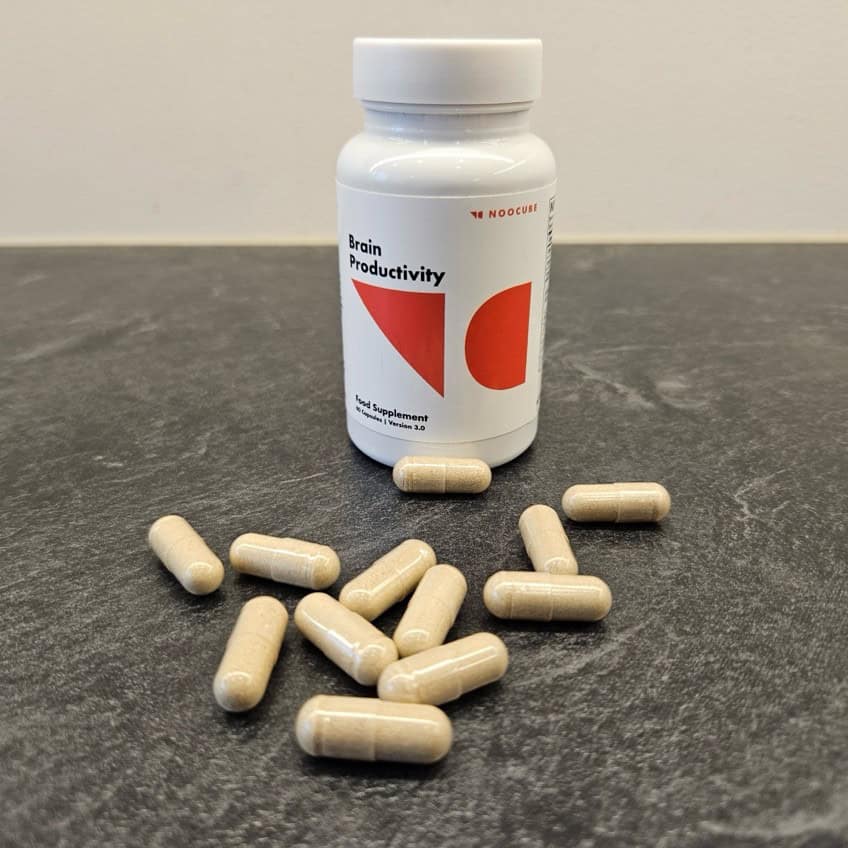
NooCube buying decision
Quick due diligence before you spend money: look at the latest Supplement Facts label, check what you’ll actually pay today, and compare alternatives in the same category. The published trial is a single-person narrative over 30 days and the underlying notes and records are not open for outside review. Treat it as useful color, not hard proof.
At a glance: formula, evidence & value
- Status: A 30-day first-person test was published; original logs aren’t independently inspectable.
- Formula: The discussion references the formula used during that trial; always confirm the current label and serving size before copying any past dosing.
- Evidence: Reported focus improvements are observational only and don’t establish efficacy.
- Claims: Don’t turn personal anecdotes into clinical conclusions.
- Value: Bundle savings depend on live pricing and how long you plan to use it.
Evidence label: Personally tested account. 30 days, bought at full price. Reported overall score: 9.1/10.
My NooCube verdict in 30 seconds
- Trial length: 30 days (completed)
- Purchase: Full retail
- Main goal: Focus and sustained output
- Tracking: Daily focus notes plus a simple self-benchmark
- Most noticeable change: Longer uninterrupted work blocks during the trial
- Noted downside: One mild headache on day 19
- Buy again? Yes, on the 3-bottle bundle
- Score: 9.1/10
How I tested NooCube
- Tester named in the account: Marcus Reid
- Other new supplements during the window: none
- Protocol: same wake time and breakfast; two capsules each morning
- Work setting: multi-hour writing and research blocks
- Completion: finished the full 30 days
The figures and comments below come from a single-person report. There was no placebo control, and because the source notes and purchase files aren’t available for third-party inspection, the observations can’t be independently verified or attributed solely to NooCube.
Before buying now, compare the current Supplement Facts panel to the one discussed in the trial: ingredient names, forms, amounts, and serving size. A label shows what the manufacturer says is inside; it doesn’t verify identity or prove performance.
Why this product was tested at all: the ads looked hypey at first glance, especially the “12 clinically studied ingredients” line you see everywhere. What nudged the tester to try it was the company behind it. Wolfson Brands has been operating since 2004 and sells TestoPrime, PhenQ, and CrazyBulk among others. That history doesn’t certify quality or efficacy on its own, but it does mean there’s a real commercial footprint. A three-bottle order was placed, a consistent routine was set, and the trial ran for a straight month in a demanding work environment where concentration is either there or it isn’t.
Week 1: Genuinely nothing
Days 1–4: no buzz, no tingles, no switch-flip moment—consistent with a stimulant-free formula.
Day 5: a subtle shift. One long research stint wrapped up without the usual midafternoon crash.
Day 7: repeat. Phone distractions dropped; there was a two-hour stretch without checking it, versus a baseline closer to every half hour.
Week 2: This is where it got interesting
The second week is where the tone of the notes changed from skeptical to cautiously optimistic. Getting started felt less like pushing a boulder uphill. Procrastination didn’t vanish, but the “warm-up tax” was smaller.
Focus windows stretched to roughly 90–120 minutes before feeling the need to step away—previously about 45–60 minutes. This wasn’t a fuzzy memory; the tester tracked these spans daily in a notes app.
Sleep seemed a bit smoother during this period, too. There’s no clean way to credit any single ingredient for that, and it wasn’t a controlled sleep study. L-Theanine does have human research around stress, attention, and some sleep outcomes, but study designs and doses vary, so treat this as context only.
NooCube Sleep Upgrade review: can you still buy it?
As of October 2026, NooCube Sleep Upgrade doesn’t appear on the U.S. NooCube storefront. The official site lists Brain Productivity and NooCube NAD+, while older Sleep Upgrade reviews still float around.
This review doesn’t rate Sleep Upgrade because it wasn’t tested here. If you arrived after seeing an old Sleep Upgrade article, confirm the current lineup on the official site rather than assuming availability.
Brain Productivity is the product covered in this 30-day account. It isn’t positioned as a dedicated sleep aid. If your aim is caffeine-free focus and sustained work, the rest of this write-up speaks to that.
One small but meaningful change also showed up: losing the thread mid-sentence happened less often. Anyone who writes or thinks for a living knows how disruptive that can be; it just came up less in week two onward.
Week 3: One problem worth knowing about
On day 19, a mild, short-lived headache hit around lunchtime—more of a dull pressure behind the eyes than a full-on migraine—and cleared in roughly 90 minutes. It didn’t recur.
There’s no solid way to pin that to any one ingredient. The formula included Alpha GPC at the time, but a single headache in a month doesn’t establish causation. It’s logged here because side notes belong in the record.
Also noted: a 12% bump on a repeat reading-comprehension self-test that week. The dataset isn’t open for audit, and taking the same test more than once can inflate scores by familiarity, so this isn’t clinical proof of effect.
Week 4: The effect normalized
By the final week, the improvements felt like part of baseline life rather than something to watch for. That’s actually a useful sign with non-stimulant nootropics: they blend into your normal rather than shouting for attention.
One honest gut check closed out the month: would stopping tomorrow be noticeable? The answer in the notes was yes—subtly, not dramatically—which is a decent sanity test.
Read the evidence before the claims
- Label and dose: Always match ingredient names, amounts, and extract specs against what’s sold now.
- Ingredient research: Many nootropic studies use different forms, doses, and longer timelines than a 30-day field test.
- Finished-product limitation: This is a personal observation log; the underlying records aren’t publicly reviewable and don’t confirm efficacy.
- Evaluation lens: Keep formulation, evidence strength, and buying value as separate judgments.
NooCube ingredients: What actually matters
Manufacturer cross-check (October 2026): the official site lists Brain Productivity v3.0 as revised. Soy-derived Alpha GPC was replaced with VitaCholine®, oat straw gave way to Panax ginseng concentrate, and the biotin and magnesium-stearate forms changed. The displayed offer: $64.99 for one month, $129.99 for three months, or $194.99 for five months, before any subscription discount. These are manufacturer-stated details, not independently verified identities or guaranteed checkout totals. The 30-day observations described here reflect a prior formula; don’t assume they transfer to v3.0. Always check the live label and offer.
Independent evidence context: a systematic look at cognitive supplements for healthy adults reported generally low certainty and translation challenges from ingredient studies to real-world buying advice. That review doesn’t prove the finished NooCube product improves memory or focus. The notes below are subjective outcomes from a non-blinded tryout; any new formulation needs its own assessment.
Only a few ingredients likely do the heavy lifting; the rest play supporting roles. One clear positive: the label is transparent.
Bacopa Monnieri: Human trials tend to use standardized extracts over longer windows—often around 12 weeks—with memory as a common outcome. That doesn’t mean NooCube will mirror those results, especially because it’s a multi-ingredient stack and extracts differ. This 30-day experience should be read as personal context, not a direct Bacopa readout.
L-Theanine: Backed by human research for certain attention, stress, or sleep measures, but estimates of effect size and optimal dosing aren’t settled. Within a blend, it’s impossible to isolate its share of the feel reported here.
L-Tyrosine: Dosing comparisons are messy. Studies span different populations and stressors, so there isn’t one universal target to map onto this product. It wouldn’t be the sole reason to buy.
Panax ginseng: This replaced oat straw in the version tested. Without knowing standardization details, you can’t compare milligrams apples-to-apples, and the available literature doesn’t allow assigning the clarity effect specifically to ginseng.
As for the rest, evidence on single ingredients doesn’t equal proof for the entire finished blend. For this review, the tracked month-long experience carried the most weight.
Who NooCube is not for
- Don’t expect an energy rush. There’s no caffeine or classic stimulants here. If fatigue is your main issue, look at sleep, habits, and medical causes first.
- This account covers 30 days. Some Bacopa research runs about 12 weeks, but that doesn’t set a minimum for this multi-ingredient product. If you continue beyond one bottle, that’s a buying choice—not a guarantee that benefits scale with time.
- If you take prescription cholinesterase inhibitors, speak with your clinician. NooCube includes Huperzine A, which acts on the same pathway.
- Sleeping under six hours? Fixing sleep is likely to beat any nootropic at improving next-day focus. Ongoing sleep problems deserve proper care.
- Pregnant? Skip it. The brand advises against use, and several ingredients lack pregnancy safety data.
NOOCUBE VS MIND LAB PRO
Both products were run through 30-day trials for a direct comparison.
On paper, Mind Lab Pro looks stronger. It includes Lion’s Mane and Citicoline at meaningful doses—two well-regarded cognitive ingredients that NooCube doesn’t use. For long-term cognitive support, that gives MLP an edge.
NooCube counters with a lower monthly price, Lutemax 2020 for screen-heavy days, and a 60-day money-back window versus 30 days for MLP.
Bottom line from testing both: Mind Lab Pro wins if formula depth is your top priority. NooCube makes more sense for value, transparent labeling, and the longer guarantee period.
NooCube pricing
NooCube sells through its official website. Buying direct can lower certain third‑party risks, but it doesn’t eliminate the chance of counterfeits. Always verify who you’re buying from and the current terms.
Single-bottle pricing is around $64.99 for 30 days. That’s not cheap for one month. While some Bacopa studies run longer, that doesn’t define how long you must use NooCube.
As of October 2026, the official store lists: 1 month at $64.99, 3 months at $129.99, and 5 months at $194.99—roughly $65, $43.33, and $39 per bottle. Double-check the live offer because bundles can change.
The advertised guarantee is 60 days. Current terms say returns can include used bottles; shipping isn’t refunded and a 5% handling fee is deducted from the product refund. Read the live policy before ordering.
If you buy outside the official store, confirm the seller, the exact formula, and refund eligibility first. Don’t assume the manufacturer’s guarantee will apply through other retailers.
My final NooCube verdict
The month-long account points to a real but modest improvement in sustained focus, with the clearest shift showing up after week one. It wasn’t dramatic. For price-to-value, the multi-bottle bundles look far more sensible than paying the highest per-month rate.
Use the label as your starting point for evaluation, but remember: ingredient research doesn’t prove a finished product will perform. Guarantees also come with fine print, fees, and deadlines, so they don’t erase financial risk. Check the current formula, pricing, and refund policy before you decide.
“The tester reported a meaningful uptick in staying locked in during long sessions—good personal evidence, not a promise that everyone will feel the same.”
Overall score reported for the test: 9.1 out of 10.
- Effectiveness: 9.1/10
- Ingredient Quality: 9.4/10
- Ingredient Transparency: 9.8/10
- Value for Money: 8.4/10
- Side Effects: 9.0/10
- Ease of Use: 9.5/10
- Overall Verdict: 9.1/10
Test authored by Marcus Reid; product purchased at full retail for the 30-day run.
NooCube FAQ: What I would want to know before buying
Did NooCube work for me?
Yes—modestly. In the 30-day account, the standout change was longer sustained work blocks after the first week. That’s one person’s outcome and shouldn’t be treated as a guarantee for others.
How long did it take me to notice anything?
Days 1–4 felt like nothing. A potential shift appeared around day 5, and by week 2 the logged focus sessions were longer than the pre-trial baseline.
Did I experience side effects?
One mild, 90‑minute headache was recorded on day 19 and didn’t return. There’s no way to confidently say NooCube caused it or to pin it on any specific ingredient.
Does NooCube contain caffeine?
The historical formula in this trial was caffeine-free. Always read the current label; not all versions are identical. If you want a sharp, short-term jolt, weigh that goal against the trade-offs of plain caffeine.
Would I buy NooCube again?
Yes—specifically on a multi-bottle bundle rather than a single month at the highest per-bottle price.
NooCube or Mind Lab Pro?
Both were tested head-to-head. Mind Lab Pro wins on formula depth when price isn’t the main concern. NooCube gets the nod for value, clear labeling, and a longer guarantee window.
Leave a Reply